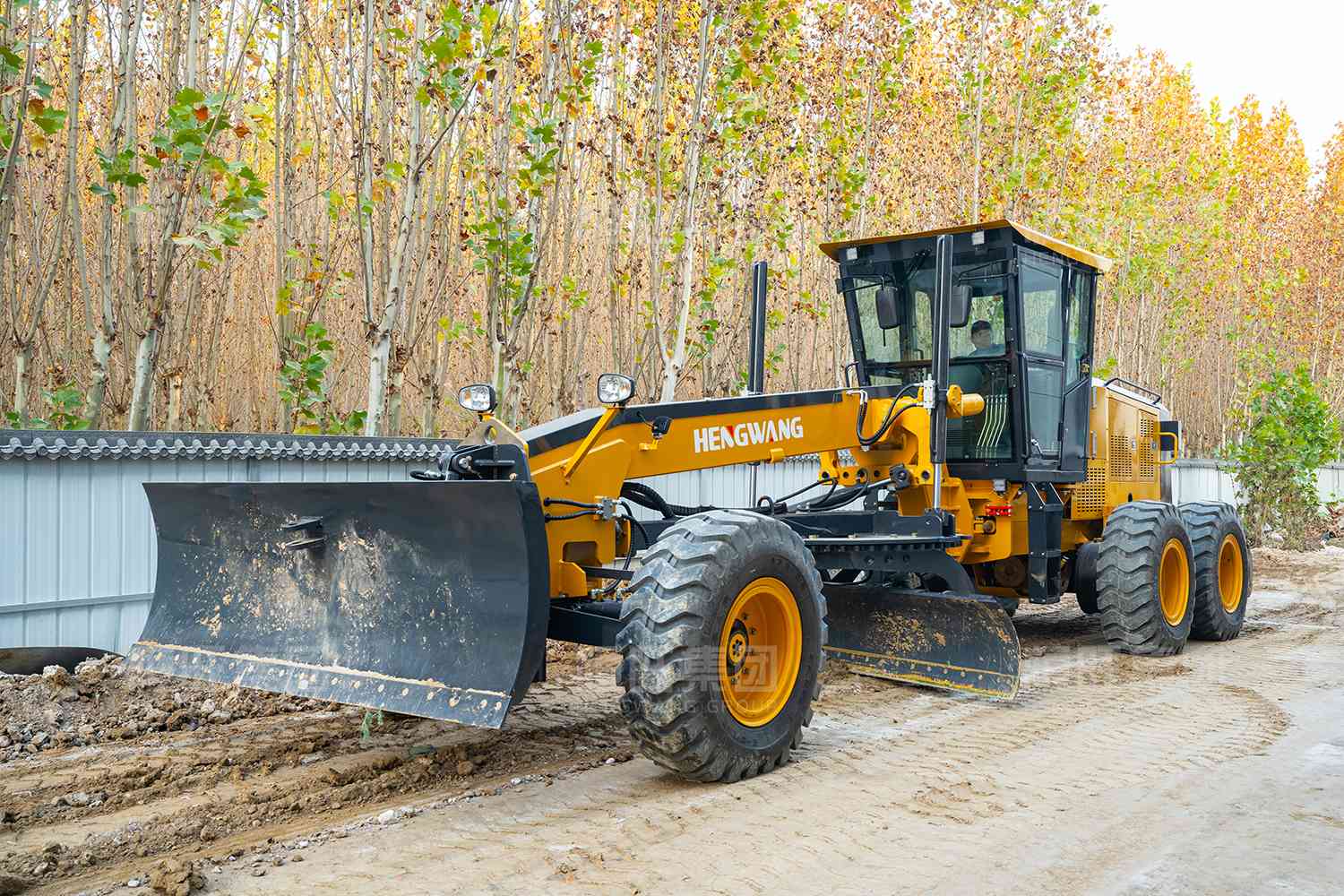
In road construction, land leveling, and engineering maintenance, motor graders and road rollers are two critical pieces of equipment, but their functions and applications differ significantly. This guide explores their core distinctions, selection criteria, and practical applications to help you make informed decisions and enhance operational efficiency.
1. Functional Comparison: Defining Roles
Motor Grader: Precision Land Shaping Expert
Core Functions:
Designed for grading, leveling, and shaping terrain, motor graders feature adjustable blades (±15° tilt) to achieve ±3cm flatness accuracy. Ideal for preparing roadbeds, drainage systems, and complex terrain modifications.Typical Applications:
▸ Roadbed preparation (error ≤3cm)
▸ Mining road slope adjustments
▸ Snow removal path creation
Road Roller: Compaction Powerhouse
Core Functions:
Uses heavy drums to apply pressure, eliminating material voids and enhancing stability. Ensures roadbed load-bearing capacity and durability.Typical Applications:
▸ Subgrade compaction (clay, gravel)
▸ Asphalt pavement final compaction
▸ Foundation preparation for large structures
2. Key Selection Criteria
1. Project Phase & Objectives
Early-stage Work (earthmoving, slope shaping) → Motor Grader
Example: A motor grader prepares roadbeds, followed by a road roller for layered compaction, improving efficiency by 40%.Final-stage Work (structural reinforcement) → Road Roller
Example: Final compaction of asphalt layers achieves IRI ≤4.2m/km, meeting international standards.
2. Material Characteristics
Loose Materials (sand, fill soil) → Road Roller Priority
Vibratory rollers reduce compaction passes by 30% for sandy soils.Hard Substrates (bedrock, concrete) → Motor Grader Assistance
Example: In mining roads, motor graders rough-level surfaces before roller compaction.
3. Environmental Factors
High-moisture Areas: Opt for all-wheel-drive motor graders to prevent bogging.
Regulatory Compliance: Urban projects may require dust suppression systems (+10% operational cost).
4. Cost Efficiency
Short-term Projects: Rent equipment (e.g., 12,000/month).
Long-term Use: Invest in durable models (e.g., ¥1.2M for a 10-year lifespan).
3. Collaborative Workflow Optimization
1. Road Construction Sequence
Motor Grader: Rough leveling (±3cm error)
Road Roller Compaction:
Layer 1: Vibratory roller (10–12 passes)
Layer 2: Pneumatic roller (eliminate wheel marks)
Final Grading: Motor grader ensures smooth finish
2. Cost-Saving Strategies
Task Allocation: Assign 1 motor grader + 2 road rollers per 500m daily work area.
Maintenance Tips:
▸ Motor Grader: Daily blade hydraulic system checks
▸ Road Roller: Regular drum debris removal
Conclusion: A motor grader acts as a "land sculptor," while a road roller serves as a "foundation strengthener." Their combined use ensures both precision and durability. Evaluate project requirements, material types, and budgets to optimize equipment selection.